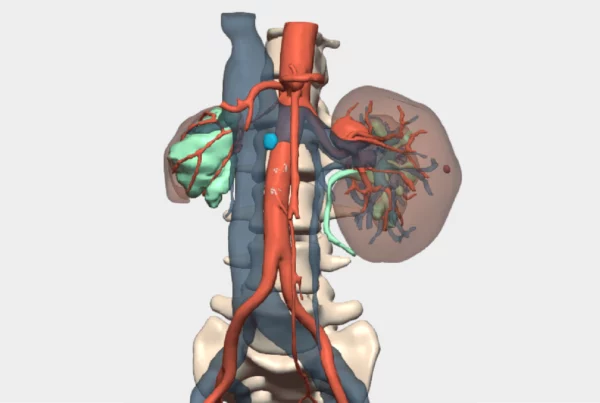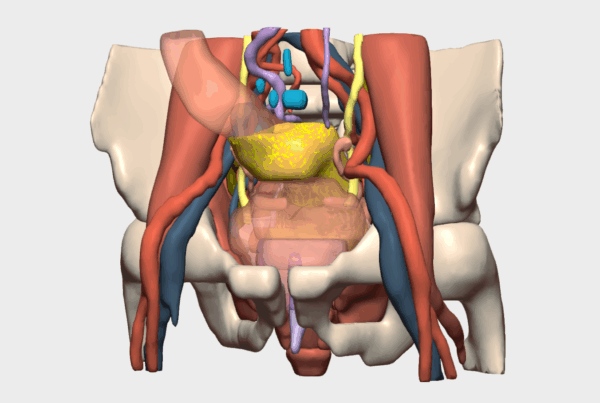




”This anatomical model enabled highly precise surgical planning, facilitating detailed preoperative assessment.
Advanced Planning and 3D Manufacturing Unit
Clinical Case
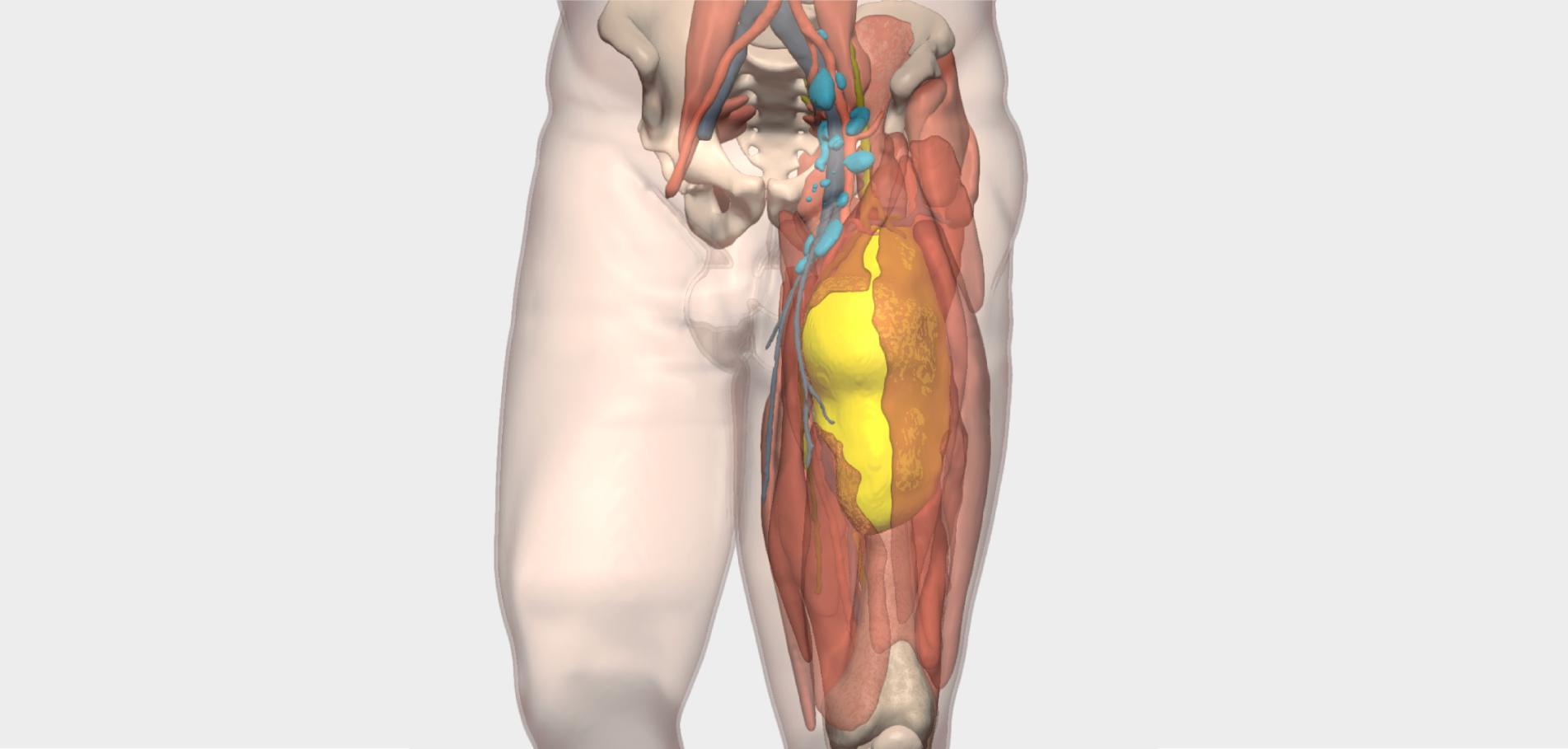
We present the case of a patient managed within a CSUR Sarcoma Centre, designated for the treatment of highly complex conditions requiring advanced expertise and specialisation. The patient presented with a recurrence of a high-grade chondrosarcoma of the left proximal femur. Tumour recurrence led to chronic infection of the prosthesis and the development of a rapidly growing soft tissue mass in the left thigh. In addition, left iliac lymphadenopathy and infected lymph nodes were identified, further increasing the complexity of the case.
Surgical Planning with a 3D Model
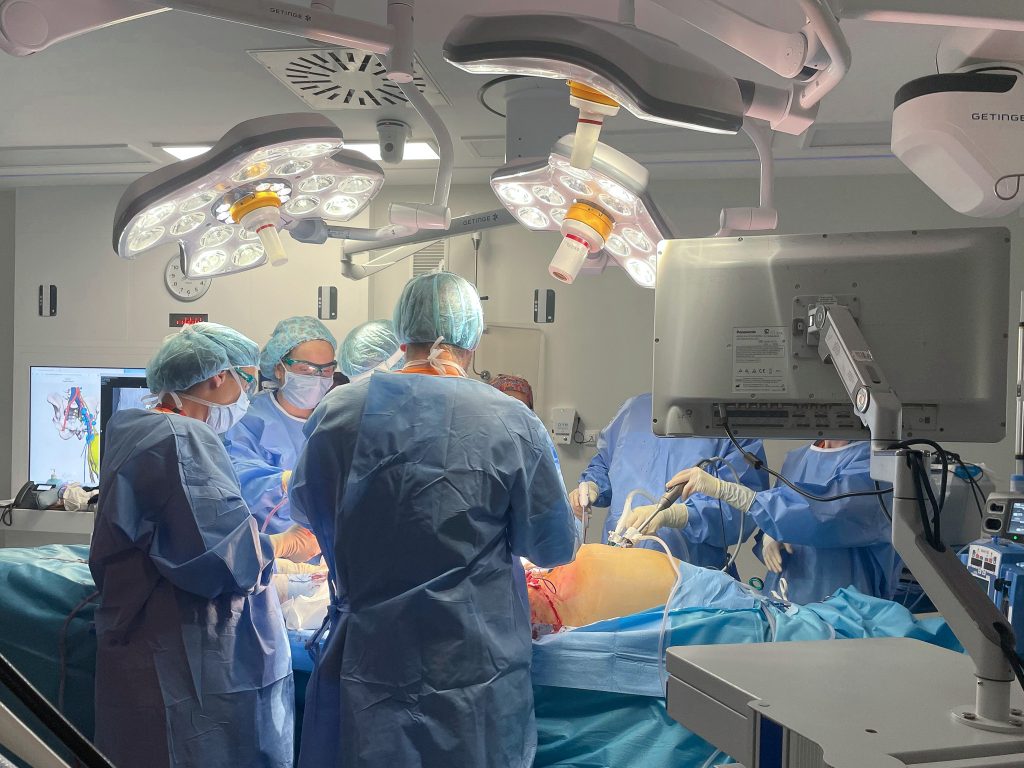
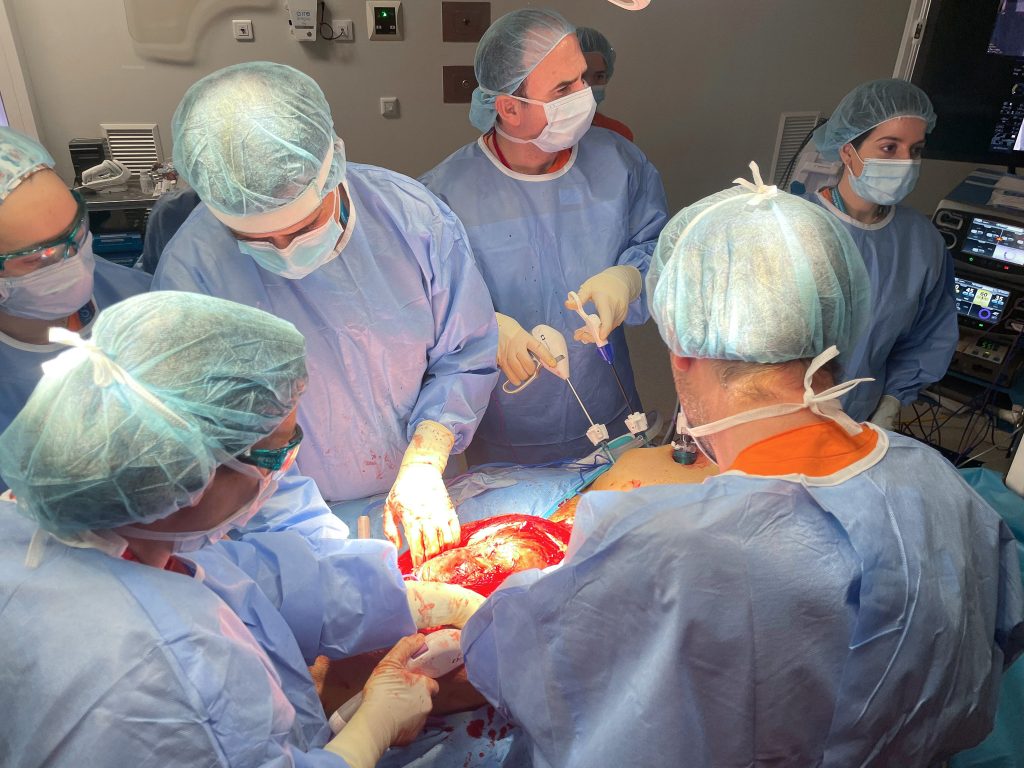
The patient-specific anatomical 3D model enabled high-precision surgical planning, facilitating detailed preoperative assessment and providing intraoperative decision-support.
Crucially, this advanced planning made it possible to consider a limb-sparing therapeutic approach, which would not have been feasible without a precise understanding of tumour extent and its relationship with adjacent structures. Integration of 3D technology directly into the operating theatre allowed accurate evaluation of tumour spread and critical anatomical relationships, supporting execution of the planned strategy and avoiding the need for a mutilating procedure.
Multidisciplinary Coordination: UPAM3D and Cella Medical Solutions
The 3D segmentation and virtual surgical planning were the result of a true interdisciplinary collaboration involving:
-
The Department of Radiology
-
The Department of General Surgery
-
The Department of Orthopaedic and Trauma Surgery
-
The Department of Microbiology
-
The UPAM3D engineering team at Hospital General Universitario Gregorio Marañón
This internal collaboration was further supported by Cella Medical Solutions, integrated within the Point-of-Care ecosystem of UPAM3D del Hospital General Universitario Gregorio Marañón.
Thanks to this coordinated effort, the surgical team approached the intervention with greater confidence, improved vascular control and a clear strategy focused on preservation of the affected limb.
Surgical Outcome and Conclusions
The patient progressed favourably and is currently fitted with a temporary solution in the form of an antibiotic-loaded cemented joint spacer. A second-stage surgical procedure is planned, involving custom joint reconstruction using either an allograft or a new modular megaprosthesis.
This case highlights the critical importance of incorporating patient-specific 3D anatomical models and virtual surgical planning into standard surgical protocols, particularly in the management of complex oncological cases. The integration of advanced 3D technologies—developed in compliance with current regulations and validated under hospital licensing—significantly enhances surgical precision and supports complex clinical decision-making, ultimately contributing to improved patient outcomes and recovery.
¡Follow us on social media to stay up to date with our latest clinical cases and technological innovations!