


Sucess Story
Dr. Miguel Ángel Gómez Bravo
Hospital San Juan de Dios
Clinical Case
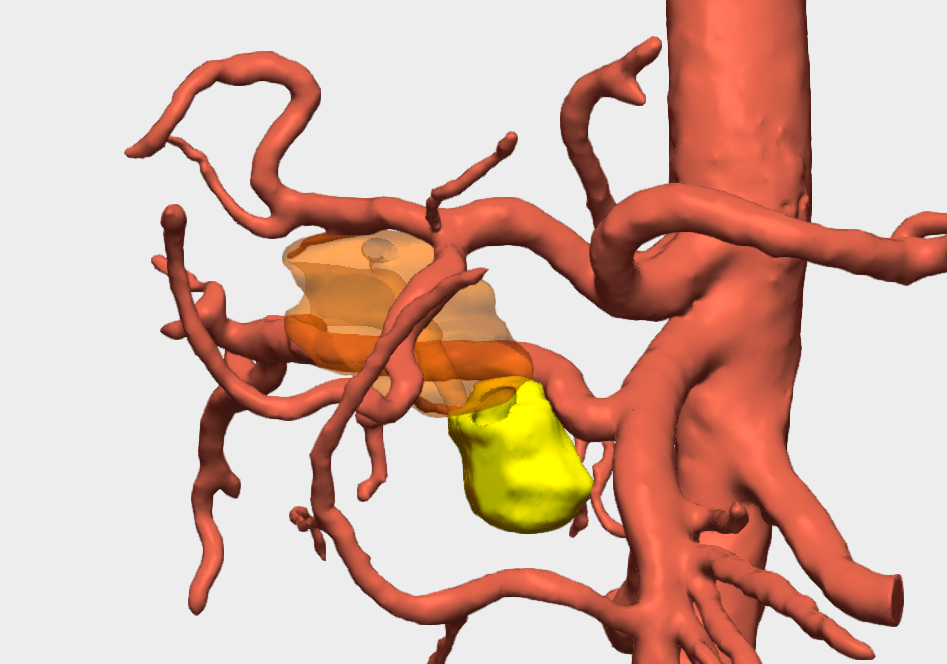
The patient, a 63-year-old male, was diagnosed by CT scan and magnetic resonance imaging (MRI) with a neoplasm located in the head of the pancreas. Several challenges were identified during preoperative assessment:
-
- The presence of an anatomical variant, in which the right hepatic artery originated exclusively from the superior mesenteric artery
- The tumour was located in close proximity to this artery, significantly increasing surgical complexity
- Inflammatory changes were observed near the right hepatic artery, secondary to a fine-needle aspiration biopsy (FNAB)
3D Surgical Planning
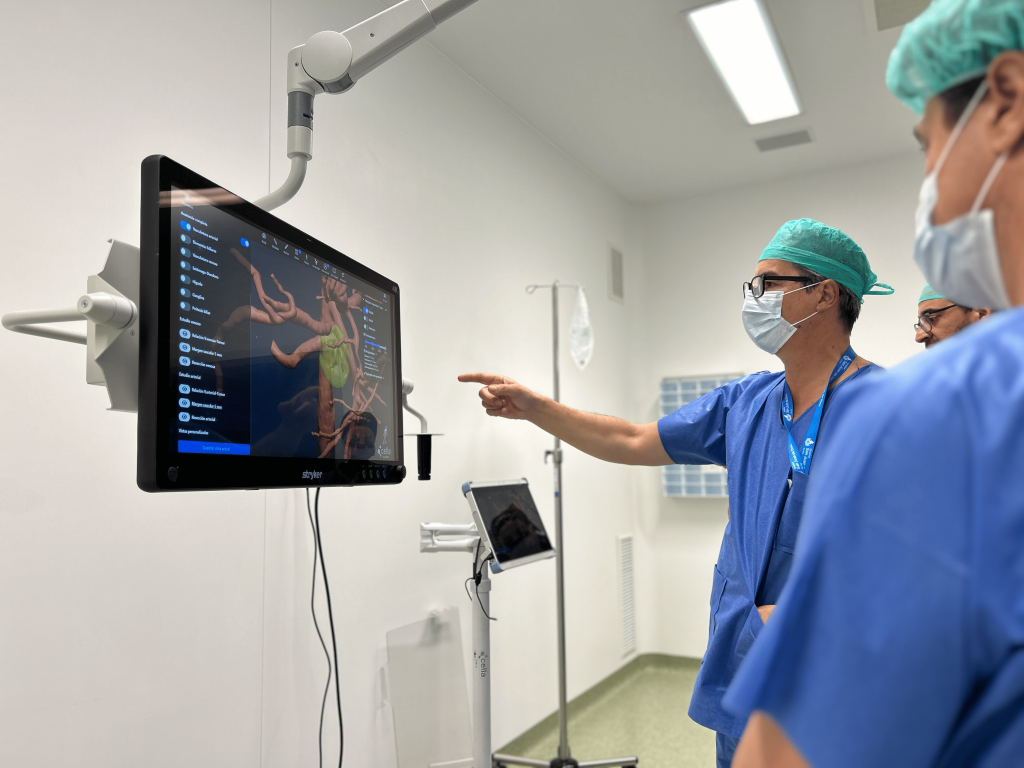
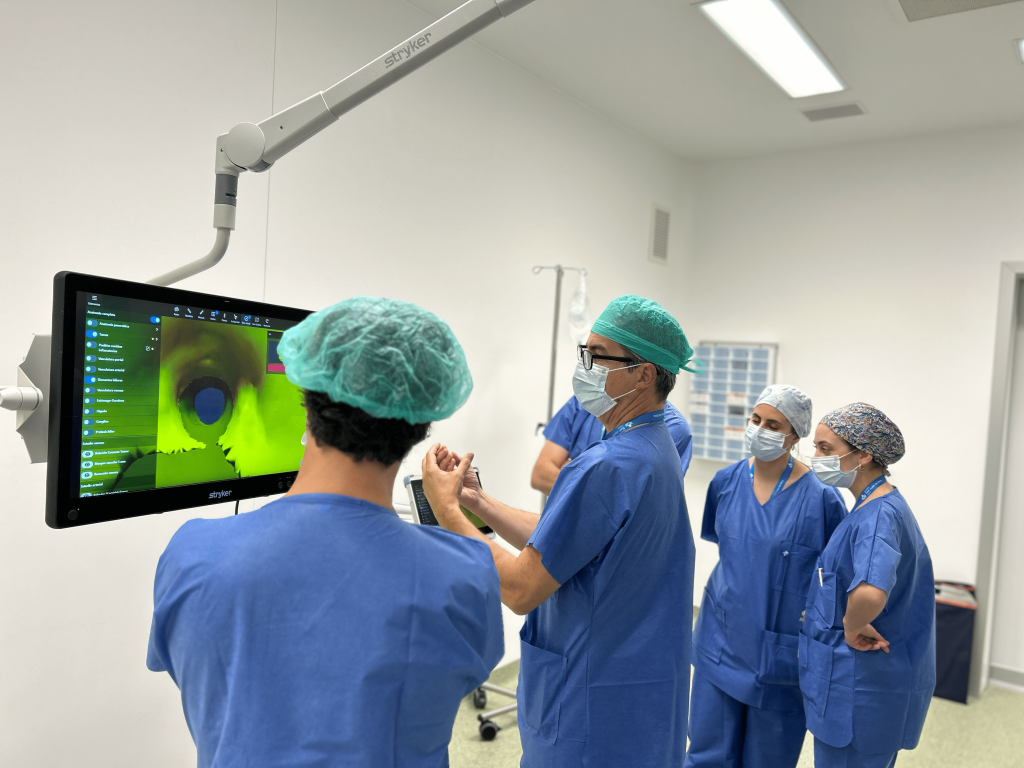
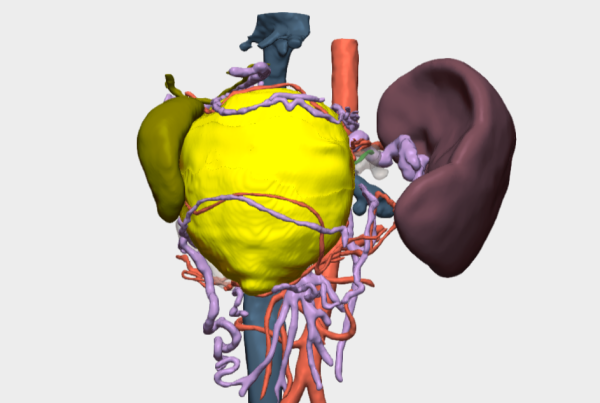
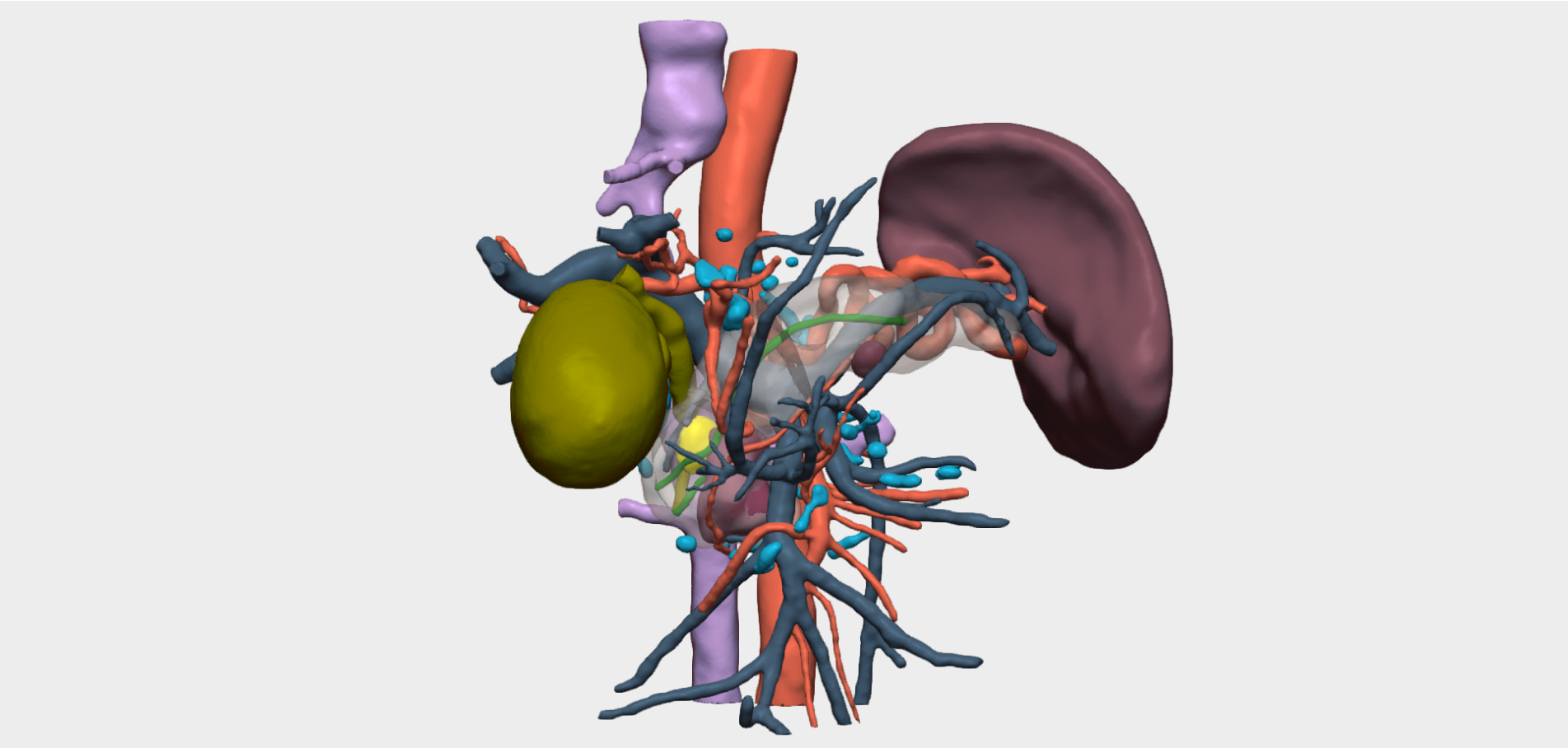
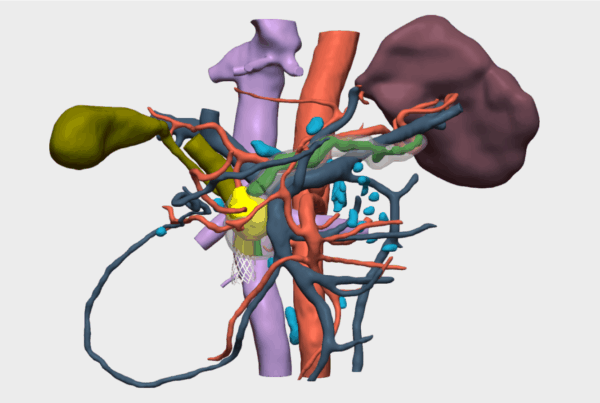
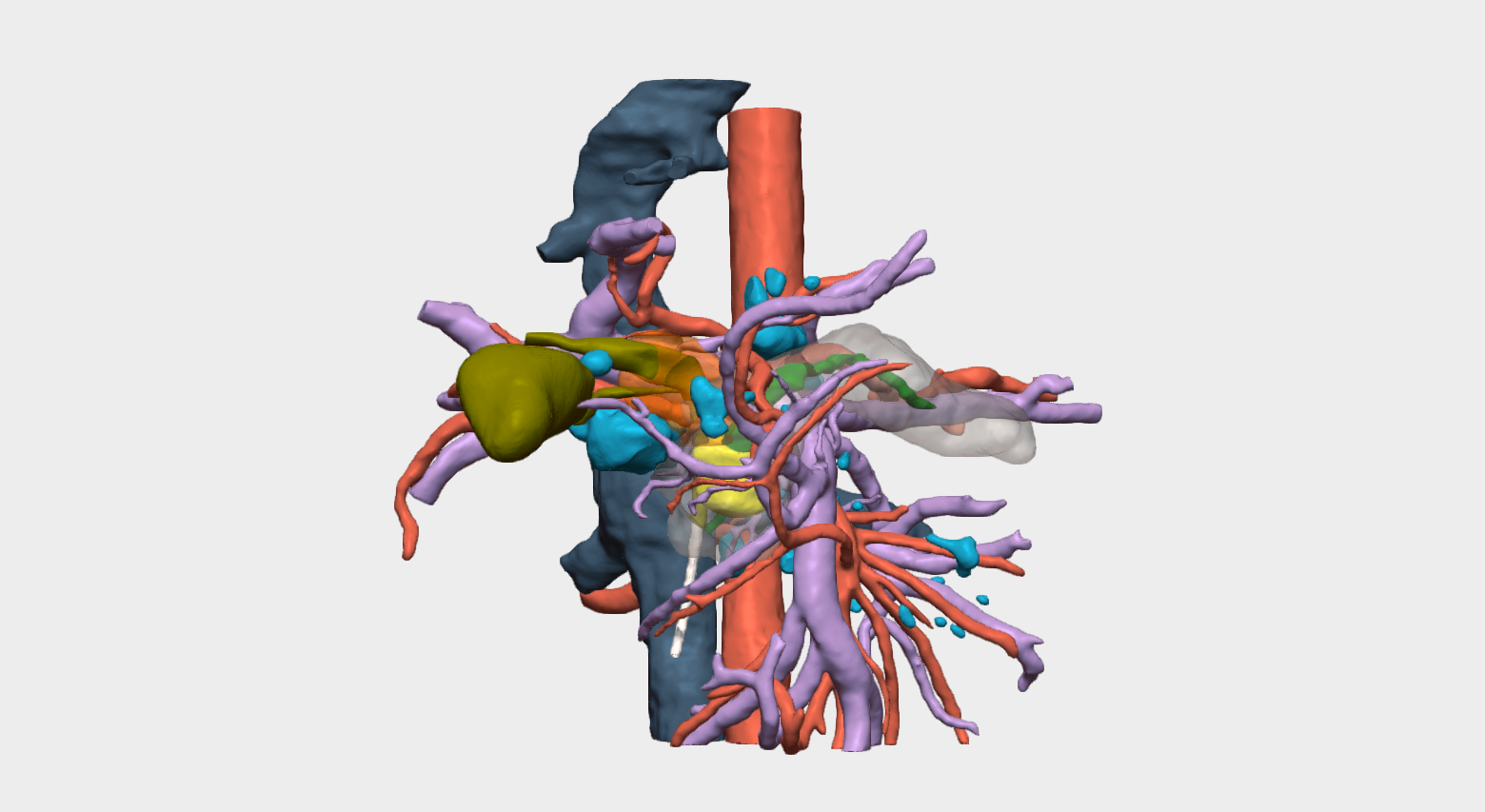
As demonstrated by conventional imaging, an inflammatory process was present adjacent to the tumour. The 3D model proved essential in differentiating the tumour from the inflammatory tissue and in accurately visualising their respective relationships with surrounding structures, including vascular anatomy, pancreatic morphology and the biliary tree.
This comprehensive analysis significantly enhanced understanding of the case and supported safer, more precise surgical planning.
Tool | Virtual Navigation
The virtual navigation tool provided detailed and reliable information regarding tumour contact with vascular structures, the common bile duct and pancreatic anatomy, optimising intraoperative assessment and improving procedural safety.
Surgical Outcome
In the operating theatre, the surgical team performed a pancreaticoduodenectomy (Whipple procedure), preserving the right hepatic artery arising from the superior mesenteric artery. In addition, a standard lymphadenectomy and Roux-en-Y reconstruction were carried out.
The total operative time was 235 minutes. The procedure was led by Dr Miguel Ángel Gómez Bravo, Consultant HPB Surgeon at Hospital San Juan de Dios, Seville, with the collaboration of Dr José Tinoco González, Dr Hinojosa, and Dr Rosa Jiménez, all Consultants in General and Digestive Surgery with extensive experience in complex pancreatic surgery.
”The model allowed us to confirm the anatomy, assess the tumour’s relationship with the aberrant artery, and verify the absence of vascular invasion.
Dr. Miguel Ángel Gómez BravoSan Juan de Dios Seville Hospital