



”The 3D model enabled us to achieve complete radical resection while minimising postoperative morbidity
Dr. Carmen BenllochPaediatric Surgeon, Hospital Clínico Universitario de Valencia
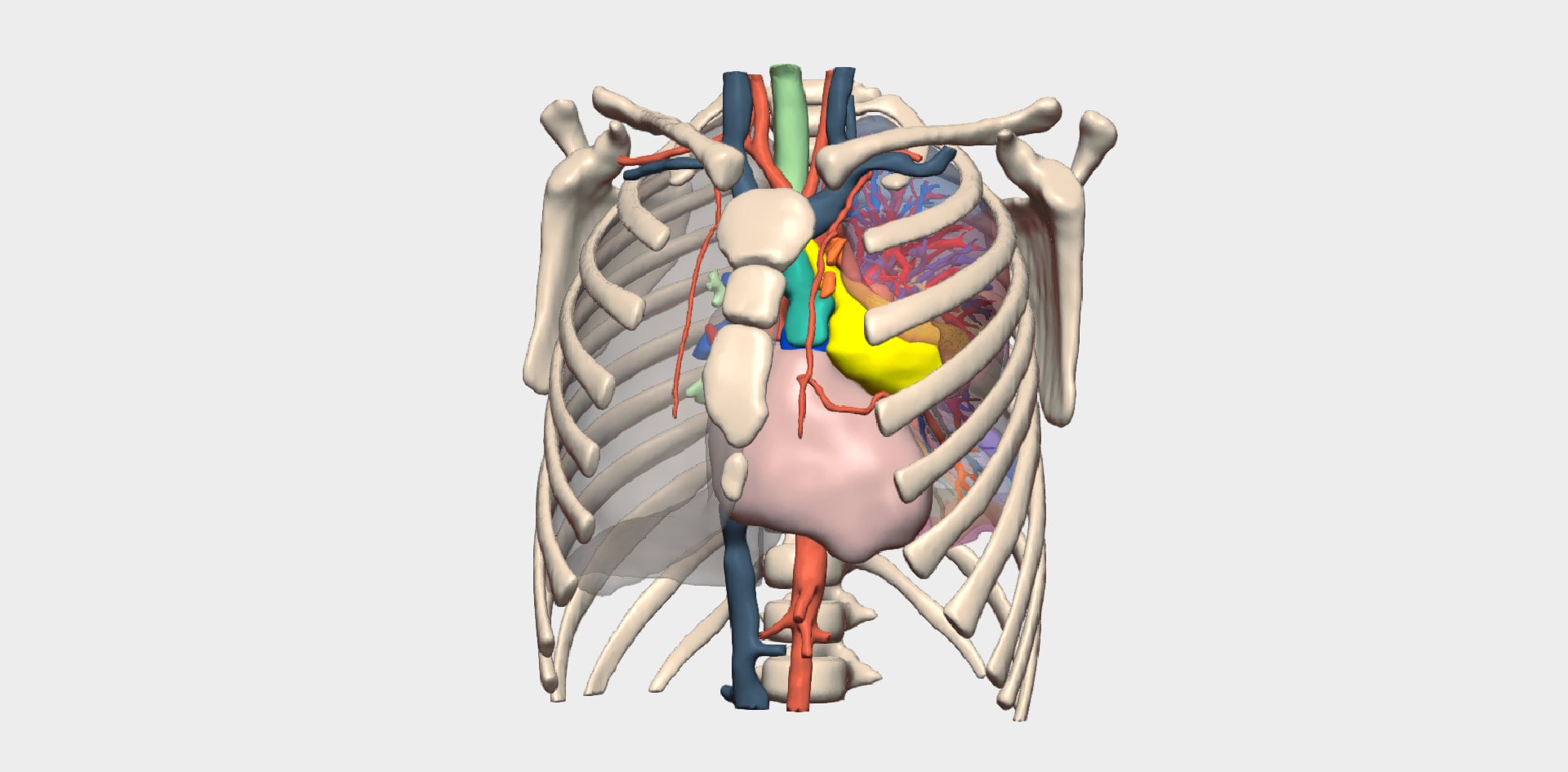
Costal Ewing sarcoma is a malignant tumour that arises in bone or adjacent soft tissues of the thoracic cage, most commonly affecting children and young adults. Owing to its anatomical location and aggressive behaviour, surgical management is particularly challenging. Preoperative planning using 3D models allows highly accurate visualisation of tumour extent and its relationship with vital structures such as the lungs, heart and spine. This approach enhances surgical safety, supports a more precise operative strategy and contributes to improved oncological and functional outcomes.
Clinical Case Presentation
We present the case of an 8-year-old paediatric patient diagnosed with Ewing sarcoma located on the left costal region. The tumour was adherent to the pericardium and the parietal pleura, posing a complex surgical challenge.
Surgical Approach to Ewing Sarcoma
LThe procedure was performed by Dr Carmen Benlloch, Consultant Paediatric Surgeon at Hospital Clínico Universitario de Valencia. The surgical intervention included:
-
-
Complete resection and disarticulation of the second rib, which demonstrated a lytic lesion on imaging studies, together with the associated intercostal musculature
-
Partial resection of the first and third ribs
-
Complete excision of the tumour, extending from the second to the sixth rib along the anterior axillary line
-
Release of tumour adhesions to the pericardium, which was confirmed to be uninfiltrated on histopathological examination
-
Resection of the affected chest wall with partial excision of the parietal pleura
-
Reconstruction using a Lactosorb plate on the first rib and a Gore-Tex® patch to repair the chest wall defect.
-


Preoperative imaging suggested a smaller tumour size and possible pericardial infiltration. However, intraoperative findings confirmed the absence of pericardial invasion.
3D Surgical Planning and Outcomes
The use of a patient-specific 3D model was essential for surgical planning. It enabled the surgical team to confirm that the tumour extended from the second to the sixth rib and was in contact with, but not infiltrating, the pericardium—findings that were subsequently corroborated during surgery.
Thanks to this 3D-assisted preoperative planning, complete radical resection was achieved with minimal sequelae for the patient, ensuring an optimal clinical and functional outcome.
Follow us on social media to stay up to date with our latest clinical cases and innovations.